The Spotted Saddle Horse: Color and a Smooth Saddle Gait
The Spotted Saddle Horse pairs flashy pinto color with the smooth, ground-covering saddle gait of its gaited ancestors. Developed in Kentucky from spotted gaited stock, it is a trail and show horse bred to be comfortable first and eye-catching always.
Two Requirements: Spots and Gait
Most breeds begin with a pedigree; this one begins with a look and a way of going. The Spotted Saddle Horse was developed in Kentucky by breeders who crossed spotted horses of gaited breeding — largely Tennessee Walking Horse and Missouri Fox Trotter blood, among other gaited lines — selecting always for two things together: bold pinto markings and a natural saddle gait, an even four-beat amble that carries a rider smoothly for hours. The breed association was founded in the late 1970s to record these horses. To be registered, a horse must show the required white spotting above the hocks (with limited exceptions) and demonstrate the gait — color without gait, or gait without color, does not make the breed.
Looks and Size
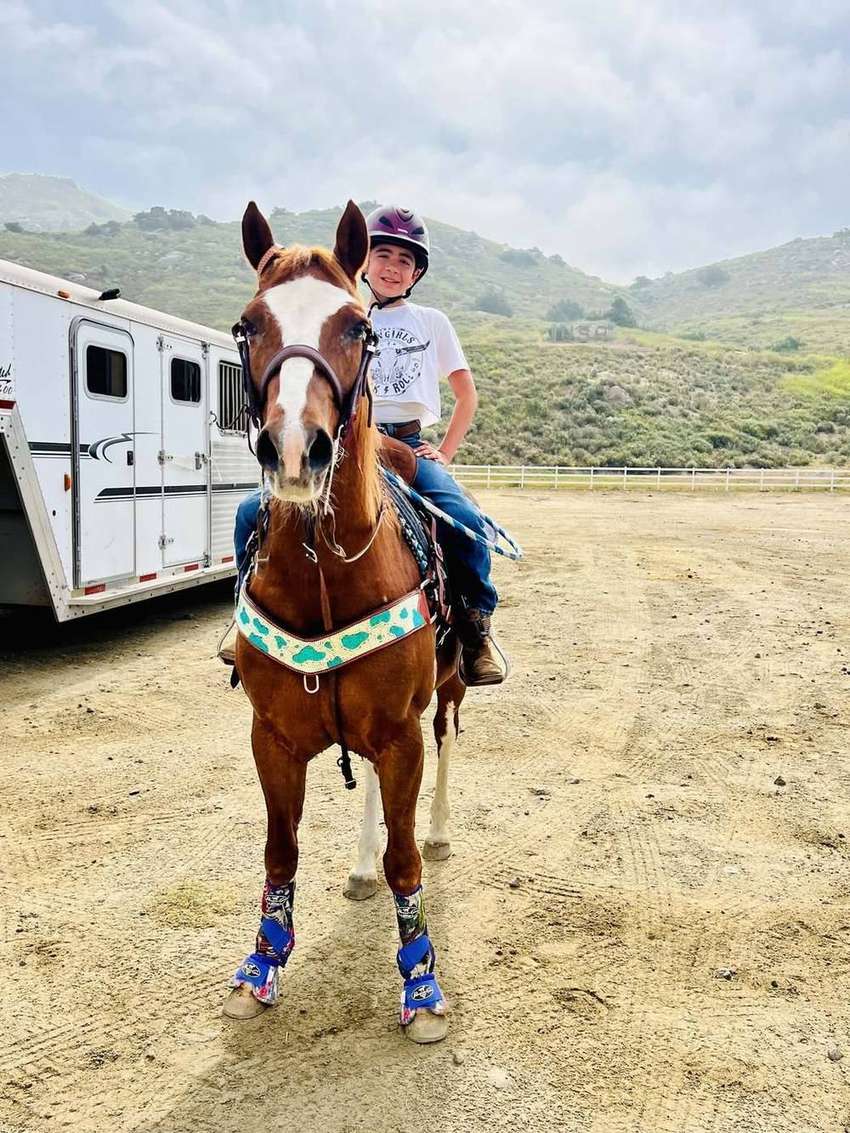
Spotted Saddle Horses are refined for a gaited breed, commonly standing about 14.3 to 16 hands, with an elegant head, a naturally arched neck, and a short, strong back. The patterns are the familiar pinto vocabulary — tobiano, overo, and combinations — over every base color, so no two look alike. Many have one or two blue or partially blue eyes, a common feature in spotted horses. Because the breed is built from several gaited sources, individuals vary more than in older closed breeds; the constant is the combination of color, gait, and a gentle disposition, which breeders treat as non-negotiable traits.
Under Saddle
On the trail, the saddle gait is the whole point: a smooth, square, four-beat gait that eats miles without posting, bouncing, or a tired rider at the end of the day. Spotted Saddle Horses show in rail classes judged on that gait and on their striking appearance, and they are popular pleasure and trail mounts across the Southeast and beyond. They tend to be level-headed and people-friendly. As with any gaited breed, a rider new to the gait should take a lesson or two from someone who knows gaited horses — the feel is different from a trot, and keeping the gait pure is mostly about not interfering.
Buying and Keeping One
Because registry rules hinge on markings and gait, a buyer should see the horse move — in person or on clear video — and confirm the papers match the horse in front of them, markings and all. A pre-purchase veterinary exam is wise with any horse, and your veterinarian can also advise on care specific to pink-skinned, white-marked horses, which sunburn more readily on unpigmented skin. Daily keeping is ordinary: forage-based feeding, regular hoof care, shelter and shade. What is not ordinary is the attention you will get. Few horses stop a trail ride conversation like a well-marked Spotted Saddle Horse gliding past at the gait.
Keep reading
From the ranch