Beating the Heat, Part Two: Work and Recovery
Our Horses in the Heat article covered the basics — water, shade, and rest. This one is for the working side: how to train and ride through summer without cooking your horse.
Timing the work
The single biggest lever is the clock. Ride early morning or evening and skip the midday furnace entirely — the difference between 7 a.m. and 1 p.m. in a hot climate is the difference between a good workout and a welfare problem. Shorten sessions and lower your expectations on the hottest days; fitness maintained gently beats fitness chased recklessly. If the horse is already blowing hard at rest in the shade, that's not a training day. Heat and humidity together are the real danger — humid air defeats the horse's cooling system, so muggy days demand more caution than dry ones at the same temperature.
Cooling out right
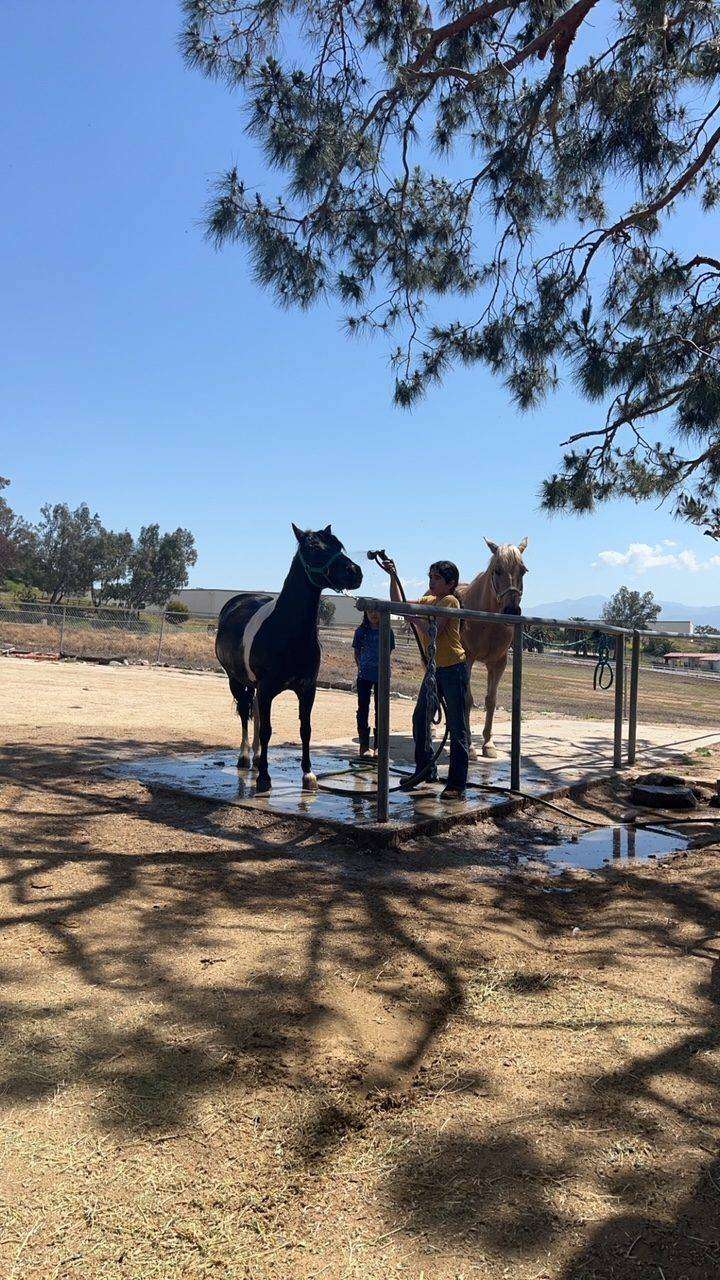
After work, keep walking until the breathing settles back toward normal — quitting while the horse is still blowing hard and tossing it in a stall is how horses tie up or overheat. Offer water (most horses drink fine right after work; let them), get the horse into shade or moving air, and scrape sweat off — water sitting on the coat insulates, while scraping and re-wetting pulls heat out. Keep cooling until the horse's breathing is easy and its attitude is back. A proper cool-down takes as long as it takes; rushing it undoes the whole ride.
Reading heat stress
Know the escalation so you can stop early: heavy blowing that doesn't ease with walking, a horse that feels hot to the touch and stays that way, lethargy or stumbling, gums that look dry or dark instead of moist and pink. Those are stop-work signals, full stop — cool the horse aggressively with water and airflow and call for experienced help or the veterinarian if the horse doesn't start recovering promptly. This is information, not a treatment protocol: when in doubt, the vet decides. The goal is to never get there, which is what the first two sections are for.
Barn tricks for hot spells
Set up for the heat wave before it arrives: extra water stations so nobody has to walk far to drink, fans in stalls (horses cool dramatically better in moving air), and a salt source to replace what's sweated out. Hose down shaded areas to cool the ground, and consider turnout at night with stall rest during the day in extreme climates. Monitor water intake — a horse that stops drinking in heat is an emergency in slow motion. Summer horsekeeping is mostly about anticipating needs a day early instead of reacting a day late.
Keep reading
From the ranch