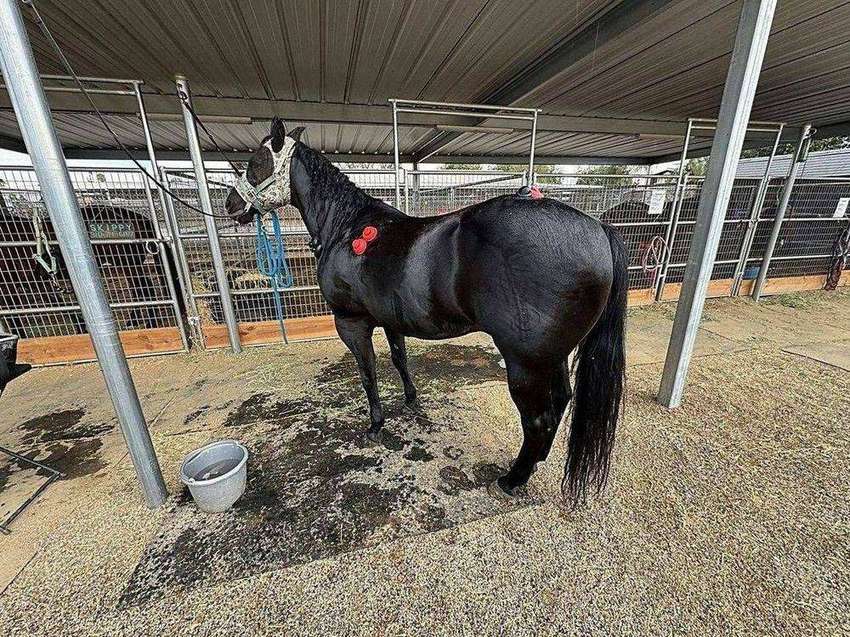
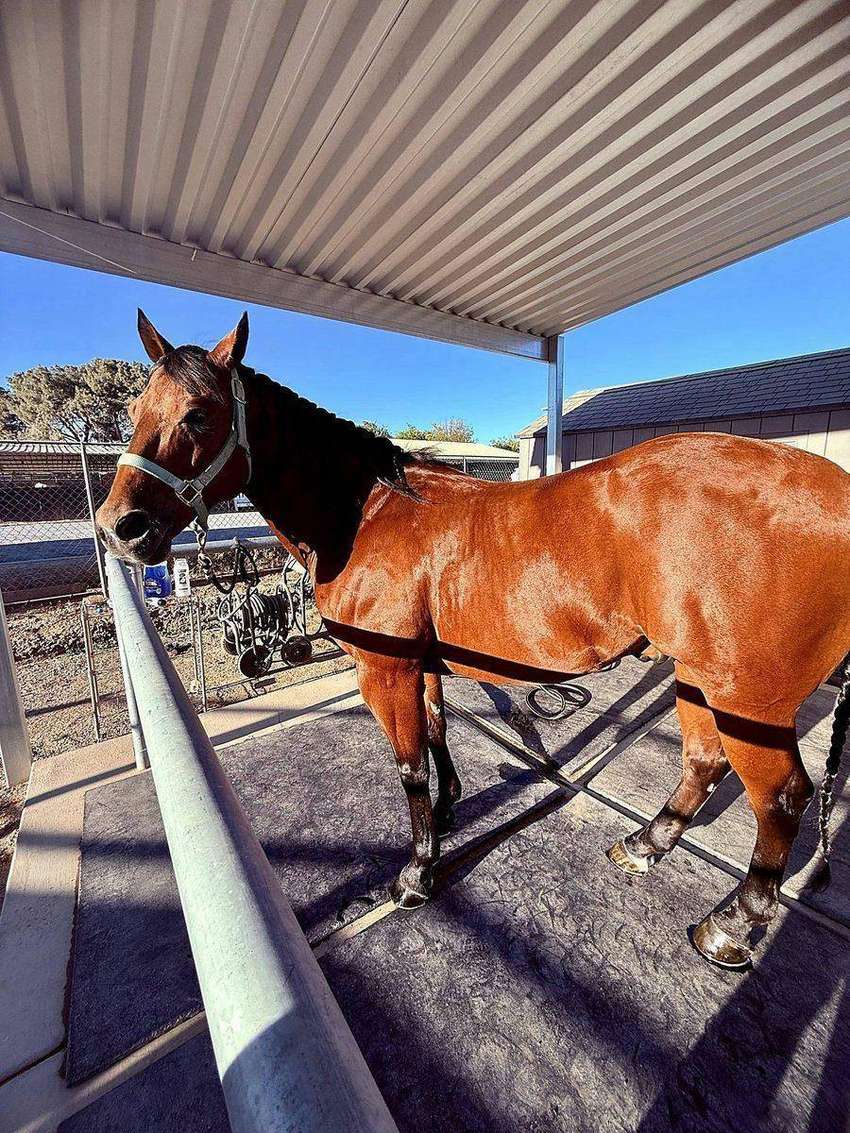
Stocking Up in Horses: Dependent Leg Edema
Stocking up is the soft, cool swelling that fills a stabled horse's lower legs — usually the hind pair — after standing still: a harmless-looking fluid settling that usually walks off with movement, but that should never be confused with a hot, painful, one-sided swelling. Always consult your veterinarian about new or one-sided leg swelling.
What Stocking Up Actually Is
Stocking up is dependent edema: fluid that settles into the tissues of the lower leg when a horse stands still for hours, as in a stall overnight or on a long trailer ride. The lymphatic system and the pumping action of movement normally keep that fluid circulating; take movement away and gravity wins. The classic picture is soft, doughy swelling that pits briefly under a thumb, fills both hind legs fairly evenly, feels cool rather than hot, and — most importantly — does not make the horse lame. Many horses show it first thing in the morning and are clean-legged again after turnout or work.
Why Some Horses Fill and Others Do Not
Any horse can stock up, but the tendency grows with age, with time spent stabled rather than turned out, after travel, during enforced rest for an unrelated injury, and in some horses after a feed or management change. Horses in hard work whose routine suddenly stops are classic candidates: the circulation habits of an athlete meet the stillness of a box stall. It is a management pattern more than a disease, which is why the history — when it appears, when it leaves, and whether it is always both hind legs — is the most useful information you can give your veterinarian.
The Swellings That Are Not Stocking Up
The skill in this topic is telling benign filling from the swellings that matter. Call your veterinarian promptly — do not simply walk it off — when swelling affects one leg only, feels hot, comes with pain on handling, lameness, a wound or scabby pastern, fever, or a horse that is dull or off feed. Those are the calling cards of problems such as cellulitis or lymphangitis, which are covered elsewhere in this library and which need veterinary treatment, not patience. A swelling that stops walking off, or that starts appearing in all four legs, also earns a call: it can be a sign of something systemic that only an examination and bloodwork can sort out.
Everyday Management That Helps
Movement is the main tool: daily turnout, regular exercise, and hand-walking for horses on rest all keep fluid moving, and cold hosing after work is a traditional barn standby. Standing wraps are sometimes used overnight on horses that fill, but they help only when applied evenly by a practiced hand — a poorly applied wrap creates the very pressure problems it was meant to prevent, so ask your veterinarian or an experienced horseperson to teach the technique before relying on it. Keep notes on when filling appears and how fast it resolves, avoid sudden long periods of confinement where you can, and consult your veterinarian if the pattern changes.
Keep reading
From the ranch