Rodeo Events Explained: Timed Events and Roughstock
Rodeo packs a remarkable variety of horse sports into one arena, from hundredths-of-a-second races around barrels to eight-second rides on bucking broncs. If you are new to the sport, the lineup of events can feel like a blur of boots, hats, and galloping hooves. This guide walks through the main rodeo events one by one, explains what you are watching, and notes how youth versions keep young riders safe.
What the Timed Events Look Like
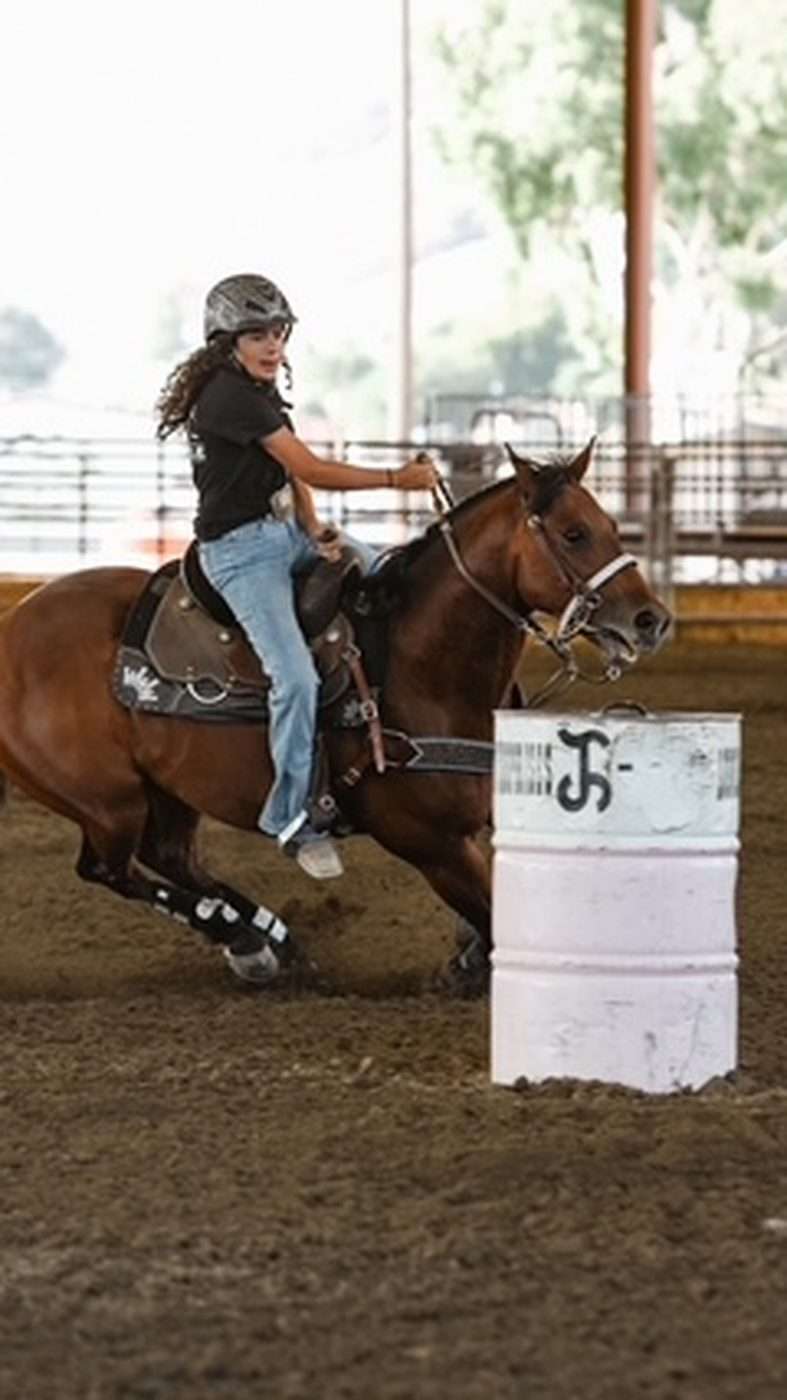
Timed events are races against the clock, and speed is only half the story — precision matters just as much. In barrel racing, horse and rider sprint a cloverleaf pattern around three barrels, and tipping one over adds a time penalty, so the fastest runs blend raw speed with tight, balanced turns. Pole bending is a weaving sprint through a line of six poles, testing a horse’s agility and a rider’s timing on every change of direction. Breakaway roping asks a rider to chase a calf, rope it around the neck, and stop — the rope breaks away from the saddle horn, and the clock stops when it does. Goat tying begins on horseback: the rider gallops to a staked goat, dismounts at speed, and flanks and ties three of the goat’s legs as quickly as possible. Team roping pairs two riders — the header ropes the steer’s horns and the heeler ropes its hind legs — and the clock stops when both ropes are tight. Tie-down roping is the solo version of the classic ranch task: rope the calf, dismount, flank it, and tie three legs. Each event mirrors a real job once done on working ranches, which is why rodeo still feels like ranch work turned into a contest.
What the Roughstock Events Look Like
Roughstock events are the other half of rodeo, and the athlete at the center is the bucking animal. In bareback riding, the cowboy grips a rigging handle with one hand and must spur in rhythm with the bronc’s bucking for eight seconds. Saddle bronc riding is rodeo’s classic event: the rider uses a specialized saddle and a single rein, matching the horse’s powerful jumps with a graceful, sweeping spur stroke that judges score alongside the animal’s effort. Bull riding needs little introduction — the rider holds a flat braided rope with one hand, stays centered for eight seconds on a spinning, kicking bull, and is scored on control and style. In all three, half the score goes to the rider and half to the animal, because a great ride needs a great buck. These events demand years of training, specialized coaching, and stock contractors who breed and care for the bucking animals. They are the events most people picture when they hear the word rodeo, and they are as much about the stock as the rider.
How Youth Rodeo Keeps It Safe
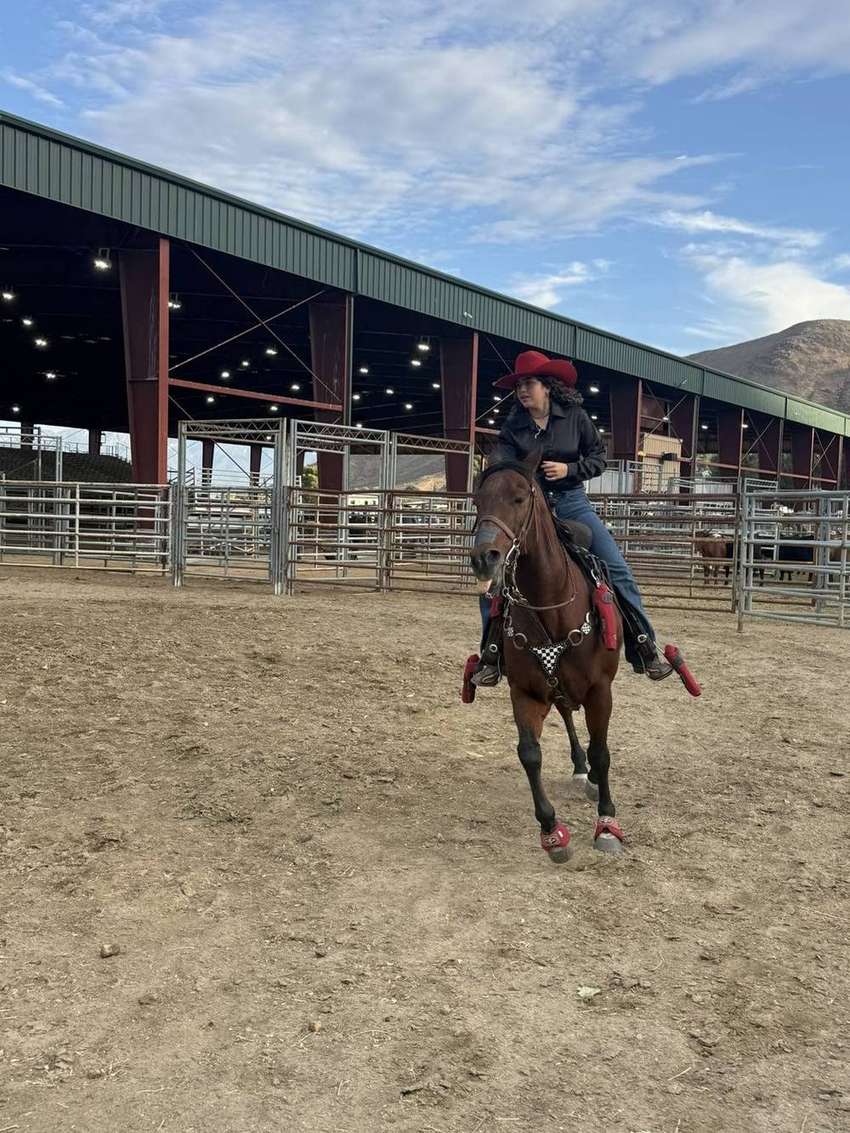
Youth rodeo takes the timed events and rebuilds them around young riders, with safety as the first design principle. Age divisions group kids with peers — commonly pee-wee, junior, and senior brackets — so a seven-year-old is not competing against a seventeen-year-old. The livestock is age-appropriate: goats and calves sized for the division, and never bulls or full-grown broncs for children. Events often run simultaneously in multiple arenas so the day moves along, and prizes tend to be buckles and trophies rather than big payouts, keeping the focus on skill and sportsmanship. Samantha, the ranch’s youth rodeo rider, competes in barrels, poles, and goat tying — a good example of how a young rider can specialize in the timed events while staying within age-appropriate competition. Protective gear, trained arena crews, and strict rules about animal handling round out a format that introduces kids to rodeo’s traditions without the risks of the adult arena.
How to Watch Your First Rodeo
Knowing what to watch for turns a first rodeo from a blur into a story you can follow. In timed events, watch the turns as much as the straightaways — a barrel racer wins or loses the race in the pocket around each barrel, and a pole bender’s run lives or dies on clean weaves. In the roping events, notice how the horse works: a good rope horse rates the calf, stops hard, and holds the rope tight like a partner, not a passenger. In roughstock, listen to the announcer’s scores and watch for the rider’s free hand — touching the animal, themselves, or the rigging ends the ride. Between events, the arena crew keeps the ground groomed and the stock moving, and the whole production runs on volunteers. Bring a hat, arrive early for the grand entry if there is one, and do not be shy about asking a neighbor what just happened — rodeo crowds love explaining their sport.
Keep reading
From the ranch