Cowboy Mounted Shooting Basics: Speed, Balloons, and Blank Rounds
Mounted shooting gallops a horse through a pattern of balloon targets, shot with single-action revolvers firing blanks — no projectiles, just black-powder flame and noise. It is fast, theatrical, and built on serious horsemanship and serious safety rules.
How a Run Works
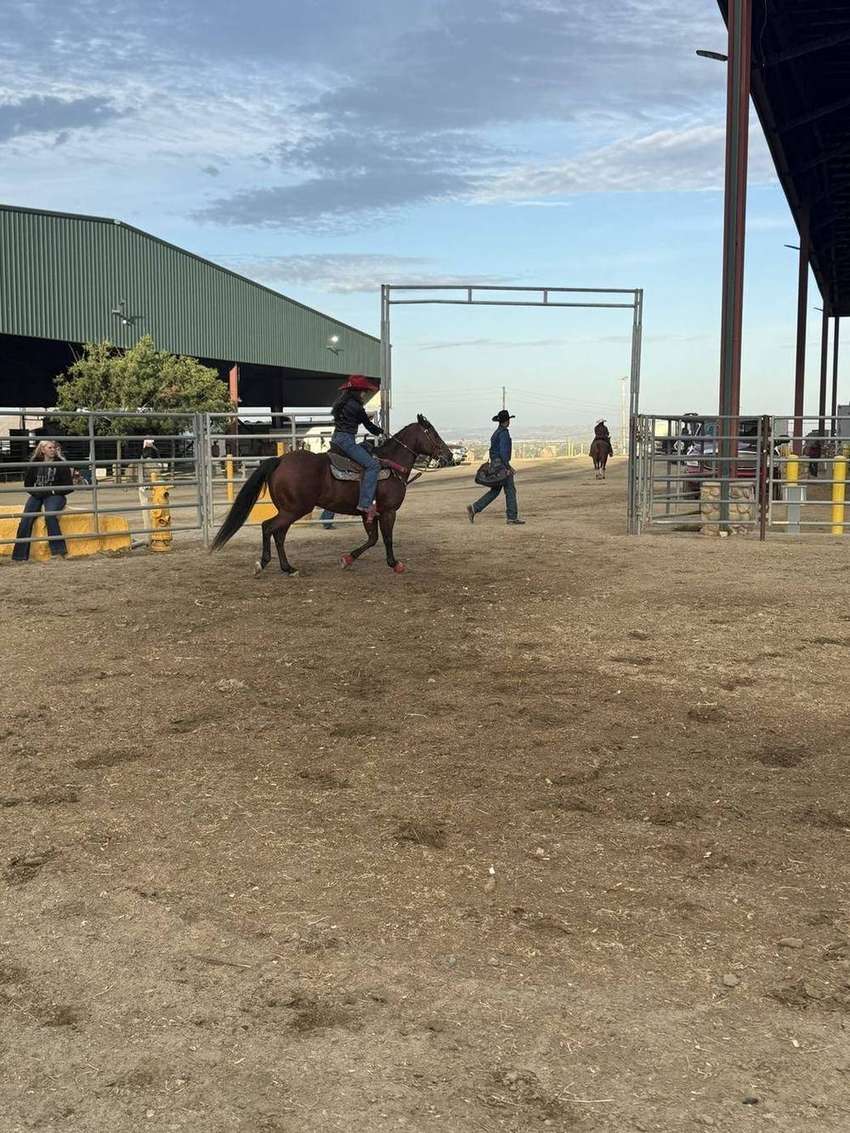
A stage is a pattern of ten balloon targets arranged around barrels and cones. The rider gallops the course with two single-action .45-caliber revolvers, five blank rounds in each, engaging five targets, holstering or switching, and finishing the last five — often including a 'rundown' line of balloons at full stretch. The blank cartridges carry no bullet; the burning black-powder particles burst balloons at close range, roughly within the length of a horse or so. Scoring combines raw time with penalties: seconds added for each missed balloon, procedural errors, or a knocked-over barrel. Classes divide riders by experience and age, and horsemanship division winners are often the smooth teams, not merely the fastest.
The Horse Half of the Team
A mounted shooting horse must accept concussion, smoke, and a rider whose attention and hands are busy — while galloping an accurate pattern on a loose rein, mostly off leg and seat cues. Desensitization is built gradually: groundwork around recorded and then real gunfire at a distance, ear protection for horses (yes, equine ear plugs are standard), and short, successful exposures that end before stress. Some horses take to the noise quickly; some never enjoy it, and good horsemen respect that answer. Speed is added last. The pattern skills themselves — rate, turn, straight lines, soft stops — are the same ones ranch and arena horses learn in ordinary schooling.
Safety Culture, Non-Negotiable
The sport runs on strict firearms discipline: period-style single-action revolvers only, inspected ammunition supplied or checked at matches, guns loaded and unloaded only in designated areas under supervision, and range officers overseeing every run. New shooters typically must demonstrate gun-handling competence, and many clubs require a qualification process before competing. Blanks are not harmless at contact range — the flame and particles that pop balloons demand respect, distance rules, and eye and ear protection for people. Anyone curious should attend a match as a spectator first, talk to the club's safety officers, and take an introductory clinic rather than improvising at home. Local laws and club rules govern everything; follow them exactly.
Watching and Trying It
As a spectator sport, mounted shooting is wonderfully readable: you can see the pattern, hear every shot, and know instantly whether a balloon survived. Riders wear Old West dress, horses range from Quarter Horses to gaited breeds and mustangs, and the community skews welcoming — it is a family sport with youth and senior divisions. If it hooks you, the path is clinic, then borrowed equipment, then a beginner class with a seasoned horse if you can arrange it, letting your own horse's training come along separately and slowly. And as with any new athletic demand, check in with your veterinarian about your horse's fitness for fast arena work.
Keep reading
From the ranch