The Figure-Eight Stake Race: A Gymkhana Staple
The figure-eight stake race sends horse and rider around two stakes in a cloverleaf of crossed turns against the clock — a gymkhana classic that rewards a handy, balanced horse over a merely fast one.
The Pattern, Plain and Testing
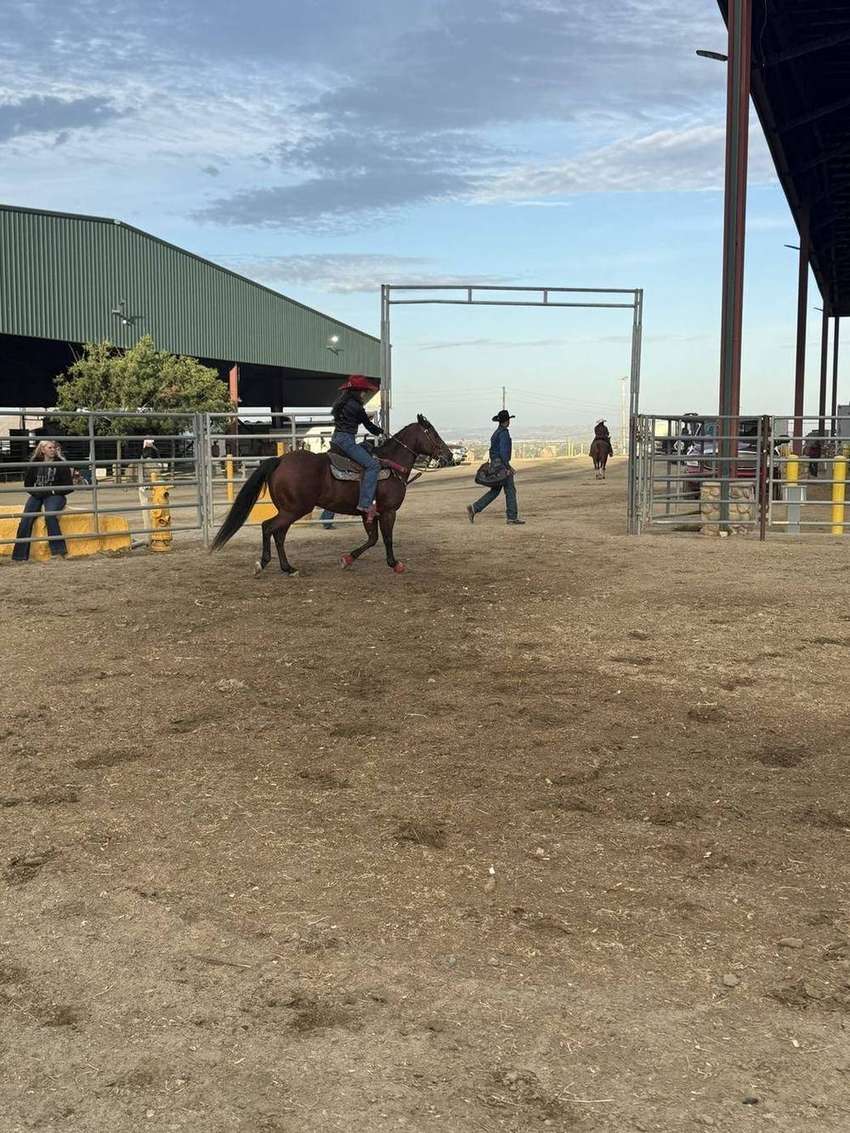
Two stakes are set a measured distance apart on the arena's centre line, with the start and finish across a timing line. The rider crosses the line at speed, circles the first stake, crosses the arena's middle on the diagonal — the crossing that gives the pattern its figure-eight — circles the second stake in the opposite direction, and sprints home. Local and association rulebooks fix the exact distances and whether the first turn is specified or the rider's choice, and knocking a stake down typically costs a penalty or the run. It sounds like pole bending's simpler cousin; ridden well, it is a complete examination of rate, turn, and acceleration in under twenty seconds.
Turns Win It, Not the Gallop
Raw speed is table stakes; the race is decided in the two circles. The skilled run rates down a stride before each stake, keeps the horse's shoulders up and hips engaged through a tight, balanced turn on the correct lead, and fires out on the diagonal without drifting wide. The crossing middle is where seconds hide: a horse that changes leads cleanly at the centre and drives straight at the far stake beats a faster horse that swings out and re-balances. Riders school the pieces separately — approach lines, turn shape, lead changes at speed — long before they run the whole pattern against a clock, because pattern souring is the occupational disease of all timed events.
Where It Fits in Gymkhana Life
The stake race belongs to the gymkhana family — the mounted-games tradition of local speed events that includes barrel racing, pole bending, and the keyhole race — and it appears at playdays, 4-H and pony club events, and regional gymkhana associations, usually across age divisions from leadline to adult. Its virtues for that world are practical: two stakes, one arena, no cattle, no jump crew, and a course a child can memorise and a grandmother can judge. Horses for it are the handy all-rounders of the local horse community, and many a barrel horse's education began with stake turns that taught it to hunt a turn and stay honest between them.
Schooling It Without Souring the Horse
The welfare of the pattern horse is a schooling discipline: most repetitions at home are walked, trotted, and loped slowly with perfect geometry, full-speed runs are rationed, and every run — fast or slow — ends the same calm way, so the horse learns the pattern as a shape, not as an explosion. Warm up the turns both directions, school the centre lead change on the flat until it is boring, and retire a run that falls apart back to slow work rather than drilling it hot. A stake-race horse that walks into the arena relaxed and walks out the same way will still be running sound and keen in its fifteenth season — which is the real trophy of the gymkhana pen.
Keep reading
From the ranch