Anhidrosis in Horses: When a Horse Stops Sweating
A horse that cannot sweat cannot cool itself — and in hot, humid weather that is dangerous fast. Anhidrosis, the reduced or absent ability to sweat, is a condition hot-climate owners should know by sight. Here are the signs and the management basics.
Why Sweat Matters So Much
Horses cool themselves mainly by sweating: evaporation carries off the enormous heat that working muscles produce. A horse with anhidrosis sweats little or not at all, or sweats only in patches — often a saddle-area trickle while the neck and flanks stay dry. Without that cooling system, body temperature climbs during work and even at rest on brutal days, and the horse pants, looks dull or anxious, and recovers slowly. Heat stress and heat stroke are the real risks, which is why this condition is managed as a safety issue first and a performance issue second — especially in hot, humid regions where nights bring little relief.
Who Gets It and What It Looks Like
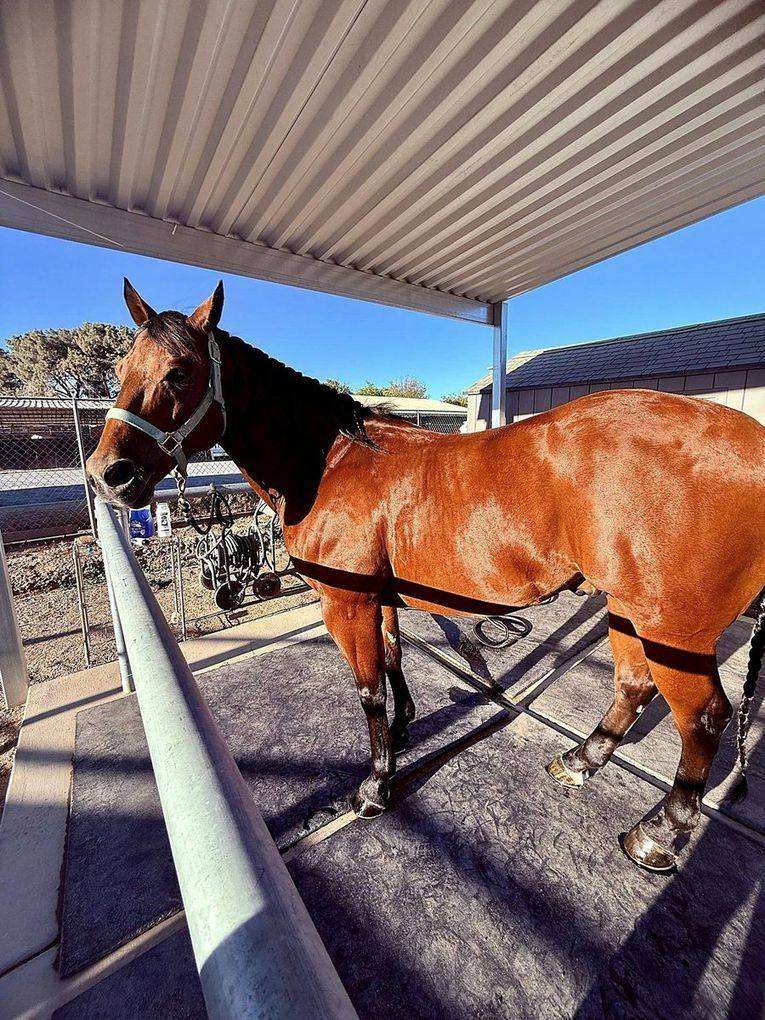
Anhidrosis most often appears in horses living in hot, humid climates, sometimes after a move from a cooler region, and it can come on gradually or seemingly overnight. Watch for a horse that is dry when herdmates are sweating, breathes fast and shallow at rest, feels unusually warm, loses condition or coat quality (affected horses often have a dull, patchy coat), and performs below its fitness. One caution: plenty of ordinary problems — fever, dehydration, respiratory trouble — can also produce a hot, panting horse. A horse that is overheated, distressed, or not cooling down is a veterinary call, not a wait-and-see. Your veterinarian can confirm anhidrosis and rule out look-alike causes.
Working With a Non-Sweater
Management starts with the schedule: work in the coolest hours, shorten sessions, build in walk breaks, and stop at the first sign the horse is not coping. Cool actively with water — repeated applications of cool water, scraping or continuous hosing per your veterinarian's guidance — plus shade and moving air from fans. Many affected horses are simply moved their workload to mornings permanently in summer, and some that relocate to drier or cooler climates begin sweating again, though that is not guaranteed. Supplements and feeds marketed for anhidrosis have passionate followings and thin evidence; ask your veterinarian before spending money or relying on any of them. There is no proven cure — honest management is the treatment.
The Barn-Wide Lesson
Even fully normal horses lose their cooling margin in extreme heat, so the anhidrotic horse is the herd's early-warning system. Ride early, keep water everywhere, know each horse's normal temperature and recovery pattern, and treat a horse that stops sweating mid-summer as information, not laziness. If you are horse-shopping in a hot climate, ask directly whether the horse sweats normally — sellers know, and the question is standard. This article is general information only. Heat illness in horses can escalate quickly; when in doubt, stop work, cool the horse, and consult your veterinarian the same day.
Keep reading
From the ranch