Sweeney in Horses: The Basics
Sweeney is wasting of the shoulder muscles after damage to the suprascapular nerve — usually from a blow to the shoulder or a too-tight collar — leaving a prominent shoulder blade, an outward swing of the leg, and a long road of rehabilitation.
A Nerve Bruised Against Bone
The suprascapular nerve supplies the two great muscles that brace the shoulder and hold the leg in line as it bears weight. Its route is its vulnerability: it wraps around the front edge of the shoulder blade, close under the skin, where a collision with a gate, a fall, a kick, or the pressure of an ill-fitting harness collar can crush it against the bone. Injured nerves stop firing, and muscles that stop firing waste. Over following weeks the shoulder's covering muscles shrink away until the ridge of the shoulder blade stands out under the skin — the hollow-shouldered look generations of horsemen named sweeney. This article is information only.
The Shoulder That Stands Out
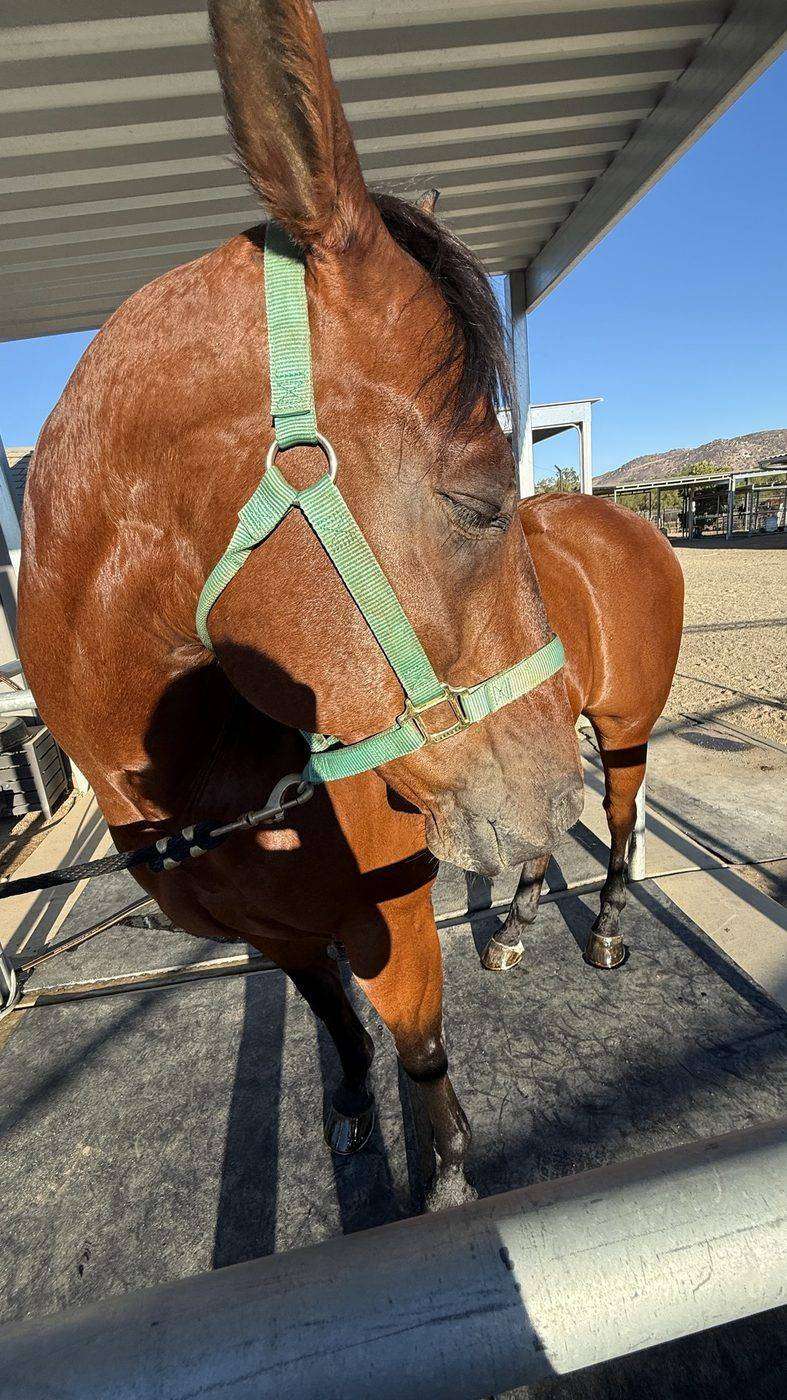
Early signs can be subtle — a horse unsteady or knuckling slightly on the affected leg, swinging it outward as it moves because the muscles that guide it are offline. The unmistakable sign arrives with time: visible wasting over the shoulder while the rest of the horse keeps its condition, the spine of the shoulder blade becoming prominent, sometimes with the shoulder looking dropped or loose when weight is borne. Because other problems — shoulder joint injury, fractures, other nerve damage — can open with similar instability, a horse that is suddenly unsteady on a front leg is not a wait-and-see case. Consult your veterinarian promptly after any shoulder trauma or front-leg instability.
Examination, Imaging, and Time as a Test
Your veterinarian examines the shoulder's stability and muscle mass, watches the gait, and uses radiographs or ultrasound to exclude fracture and joint damage — the injuries that change the plan entirely. Where available, electrodiagnostic testing can confirm the nerve's silence and, later, its recovery. Part of the diagnosis is honestly chronological: nerve injuries declare their severity over weeks, as muscles waste in the nerve's exact territory and function either returns or does not. The examination also checks the tack story — a working horse's collar fit is a medical question here, not an equipment nicety.
Rest, Rehabilitation, and Honest Timelines
Treatment is directed by your veterinarian and built on time and graded rehabilitation: rest from work, anti-inflammatory care in the early phase as advised, then controlled exercise and physiotherapy-style work to maintain the limb while the nerve regrows — nerves heal at millimeters per day, so recovery is measured in months. Some horses regain full muscle and function; others keep a wasted shoulder and a serviceable, if altered, gait. Surgery is occasionally considered in selected cases at referral centers. Prevention is concrete and unglamorous: well-fitted collars checked under load, gates and trailer partitions that forgive a collision, and prompt examination after any blow to the shoulder.
Keep reading
From the ranch