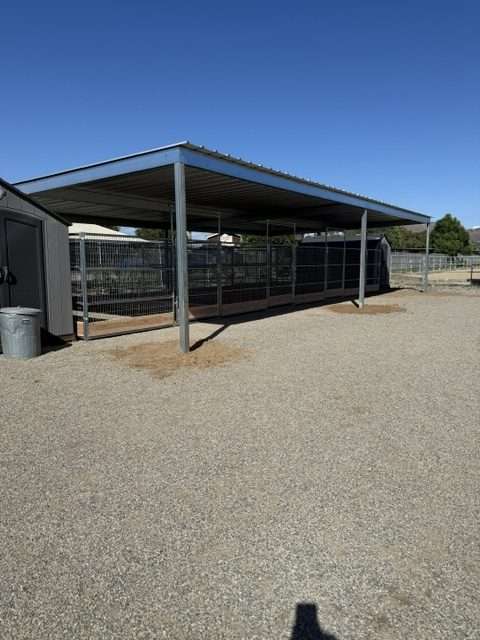
Storm Preparation for Horses: Before the Weather Turns
Hurricanes, floods, and severe storms are managed days before they arrive: identification on every horse, supplies laid in, and an evacuation decision made early.
Decide Early, Because Roads Decide for You
The central fact of horse storm preparation is timing: a trailer that could have left on Tuesday cannot move on Thursday, and officials close roads, flood routes, and fill every boarding barn in the safe zone while owners are still deciding. Experienced coastal and storm-country farms therefore run on triggers set in advance — a forecast threshold at which horses evacuate, a named destination, a second destination if the first is in the path — so the decision is executed, not debated, under pressure. Farms that stay put make that choice just as deliberately, with preparations to match. Either plan beats the third option, which is improvising.
Identification That Survives a Broken Fence
Storms scatter horses, and scattered horses are reunited with owners through identification. Layer it: a microchip as the permanent record, plus visible, immediate identification for the emergency itself — contact information written on the horse or attached to a breakaway halter or a braided-in tag, using methods local extension services recommend before storm season. Photograph each horse from both sides and the face, and keep current photos, registration or ownership records, and veterinary contacts stored off-site or in the cloud where a flooded barn office cannot take them. Identification done in a calm week is a five-minute job; done in a storm, it is impossible.
Supplies for the Horses That Stay
Horses riding out a storm at home need their humans stocked like quartermasters: feed and hay for well beyond the expected disruption, stored where floodwater cannot reach it; water secured against power loss, since wells stop when pumps stop — troughs and tanks filled in advance; medications refilled; and the property prepared, with loose objects that become projectiles in wind removed or secured, barn doors and gates checked, and trees over fences and shelters inspected. Whether horses are safer in or out during the storm itself depends on the buildings and the land, a decision to make with local guidance before the season, not during the warning.
The Season Before the Season
The farms that handle storms best treat preparation as a spring project: evacuation routes driven once, trailer tires and lights serviced, destination barns spoken to, identification renewed, and the plan written where every staff member and family member can find it. After any storm, the debrief matters as much as the prep — what flooded, what failed, which horse was hard to load at midnight — written down while it is remembered. Storms cannot be scheduled, but readiness can. Put it on the calendar in the quiet months, and the loud ones get noticeably quieter.
Keep reading
From the ranch