How Should You Sit in the Saddle? Posture and Balance Basics
Good position is a safety tool first and an elegance tool second — here's the foundation every rider builds on.
The Aligned Seat
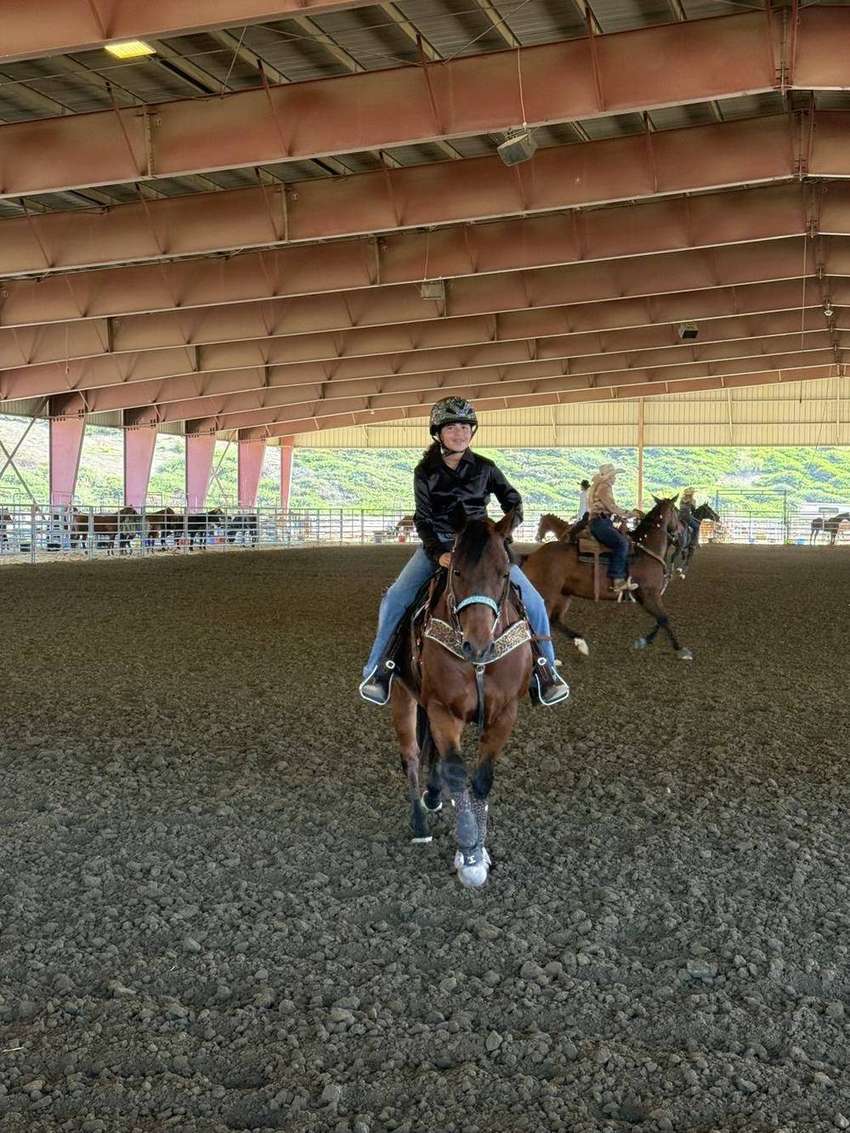
The classic checkpoint is a straight line from ear to shoulder to hip to heel — the plumb line that keeps your weight stacked over your base of support. Your pelvis sits neutral, neither tipped forward like a duck nor tucked under like you're slouching on a couch. Shoulders stay relaxed and open, not rounded forward or yanked back military-straight. This alignment isn't about looking pretty; it's physics — a stacked rider is a stable rider, and a stable rider is a safe one.
Legs and Stirrups
Your leg should drape around the horse like a wet towel, not grip like a vise. The stirrup rests on the ball of the foot, with the heel lower than the toe as a natural anchor — think of letting your weight sink into your heels rather than forcing them down. Knees stay soft and close without clamping; gripping with the knees pivots the whole upper body forward. A quiet, steady lower leg is what keeps you secure when the horse spooks or stumbles, so it's worth building deliberately from day one.
Hands and Reins
Hold the reins with thumbs on top, hands carried low and quiet in front of the saddle, about a fist's width apart. The goal is a straight, elastic line from your elbow through your hand to the horse's mouth — no pulling back toward your body, no hands bouncing in the air. Your hands should follow the horse's motion independently of your seat, which is why balance work matters so much; a rider grabbing the reins for balance punishes the horse's mouth. Soft hands come from a secure seat, in that order.
Balance Exercises at the Walk
The walk is the gym where balance gets built. Practice two-point position at the walk — hovering just out of the saddle with a closed hip angle — to develop an independent seat. Arm circles, touching your toes, and riding with one hand or no hands (on a safe horse, with supervision) teach your body to balance without grabbing. Stirrup-less work at the walk, even for a few minutes, builds the deep seat muscles nothing else reaches. Do these exercises regularly and every faster gait gets easier, because balance is the skill underneath all the other skills.
Keep reading
From the ranch