Rainwater and Runoff: Keeping the Barn Dry
Most barn water problems are not plumbing problems — they are grading problems. Where rain lands, gathers, and flows decides whether stalls stay dry and paddocks stay usable.
Follow One Storm With Your Eyes
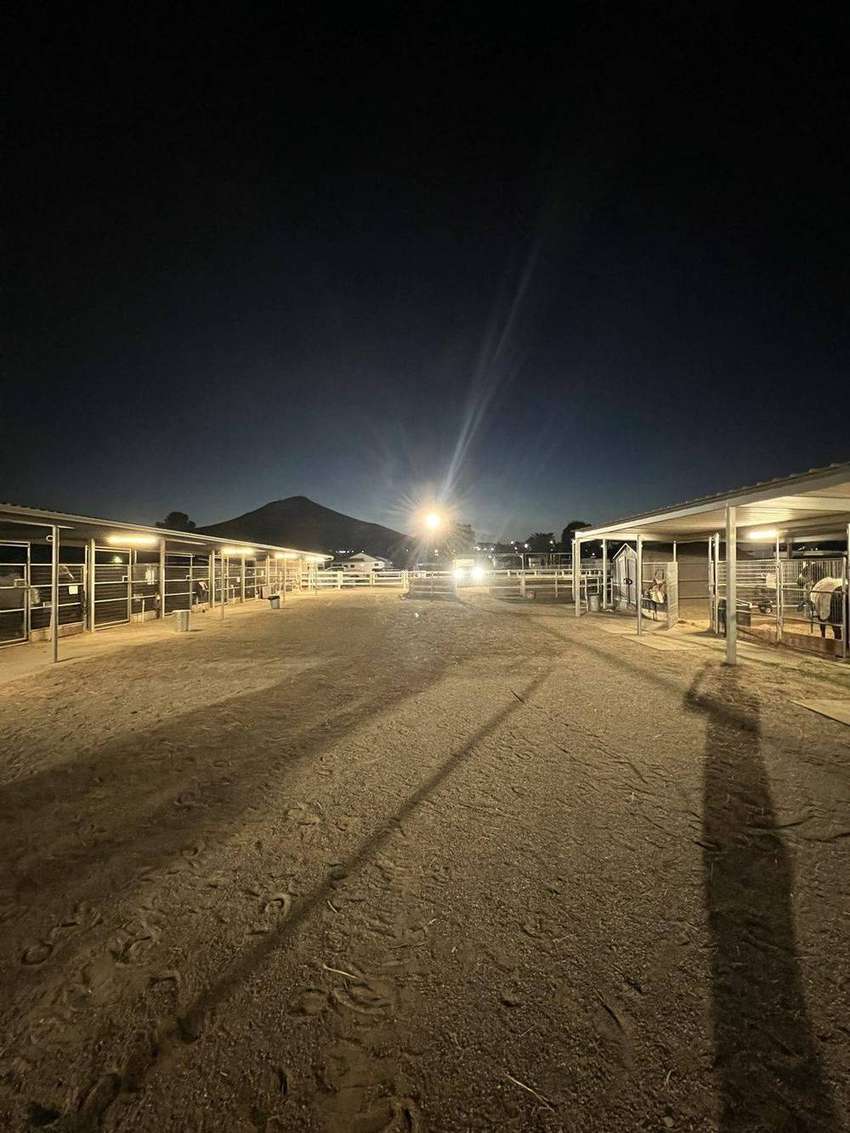
The cheapest drainage education is standing in the yard during a real rain and watching. Water reveals the truth no dry-day inspection can: which way the barn pad actually slopes, where the roof dumps, which paddock corner becomes a lake, and whether the manure pile sits in the flow path. Barns are usually built sensibly and then undone by inches — a settled slab, a gravel pile regrading a corner, a gutter quietly dumping at the foundation for years. Before spending on solutions, map the problem in a storm, with photos. Contractors and drainage advice both get dramatically better when they start from where the water truly goes.
Grade, Gutters, and the Six-Inch Rule
Three basics solve most barn water trouble. First, grade: ground should fall away from buildings in every direction, even gently, so water never needs permission to leave. Second, roofs: gutters and downspouts that carry roof water — an astonishing volume in a storm — well away from stalls, aisles, and paddock gates, into swales, dry wells, or daylight drains where local rules allow. Third, surfaces: high-traffic areas (gates, waterers, run-in entries) stay usable when built up on a drained base of gravel or similar footing material rather than raw dirt. Local regulations govern drainage work near waterways and neighbors, so check before digging — and keep manure storage out of the flow entirely.
Mud Is a Health Issue, Not a Cosmetic One
Standing water and deep mud are veterinary problems wearing a disguise: thrush and softened, cracking hooves, scratches and mud fever on legs, bacteria thriving where horses stand to eat, insects breeding in every puddle, and ice where the puddle was. Horses camped at a muddy gate also tear up ground, strain legs in the suction, and arrive at feeding already stressed. The payoff for drainage work is therefore not a prettier farm — it is sound feet, clean legs, and paddocks horses can use all winter. Prioritize fixes the way a farrier would: waterers, gates, and feeding areas first, because that is where horses are required to stand.
Maintaining What You Build
Drainage is a system with moving parts, and storms audit it for free. Keep gutters cleared before the wet season, walk ditches and swales after big rains to clear the branch or bedding dam that rerouted everything, and re-top gate gravel before it disappears into the mud it was meant to defeat. Note recurring wet spots in your barn journal with dates and weather; a spot that floods twice a year is weather, and a spot that floods every rain is a project. Water will always have the last word at a barn. Good drainage is simply making sure it says something you can live with.
Keep reading
From the ranch