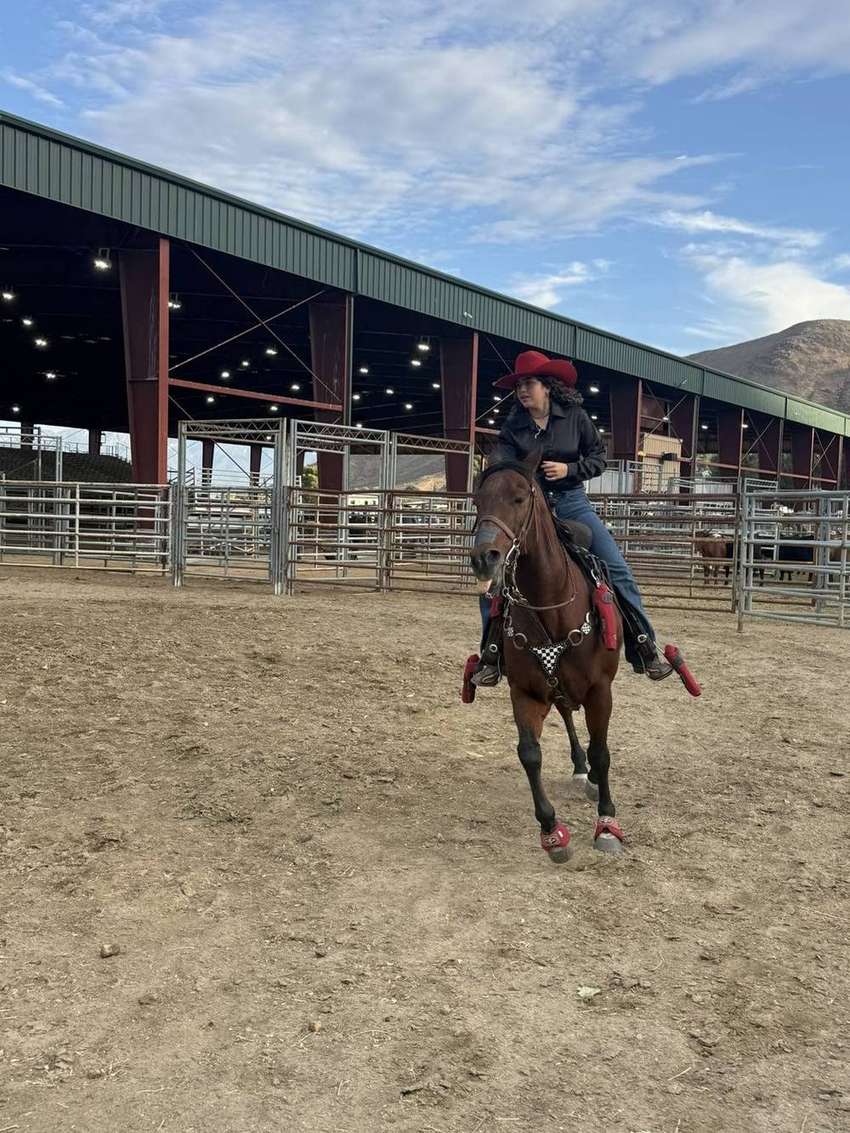
Para Reining: Reining for Para Riders
Para reining adapts the western sport of reining — spins, circles, sliding stops, and lead changes on pattern — for riders with physical impairments, using graded classes and approved compensating aids so the pattern stays the test.
The Same Pattern, Ridden as Written
Reining asks horse and rider to perform a prescribed pattern of manoeuvres — large fast and small slow circles, spins in both directions, flying lead changes, run-downs ending in sliding stops, rollbacks, and back-ups — judged on smoothness, finesse, and willingness. Para reining keeps that test intact: riders perform reining patterns in competition, in classes organised by grade so that riders with comparable functional profiles compete against one another. The sport developed within the western showing world, with para classes offered alongside open reining at breed and association shows, and an international organisation — World Para Reining — founded to give the discipline its own structure, rules, and championships.
Grades and Compensating Aids
The machinery that makes para sport fair is classification and the compensating-aid list. Riders are assessed into grades according to their functional profile — broadly, which aids they can use and how their balance and strength work in the saddle — and each grade carries a list of permitted adaptations: a raised or modified saddle, looped or connected reins, a rein handhold, riding with two hands where the open rules require one, whips or voice used within the grade's allowances, and a caller or pattern assistance in some grades. The principle is the same one this library met in para dressage and para driving: the aid compensates for the impairment, never performs the manoeuvre — the horse must still be ridden, and the judging standard for the pattern does not move.
Horses for Para Reining
The para reining horse is the reining horse at his most finished: broke to the pattern, honest in the stop, and — the quality para riders prize above brilliance — consistent. Predictability is a competitive virtue here in a way it is not in the open pen: a rider whose balance or rein aids are adapted needs a horse whose responses are the same on Tuesday as on show day, that tolerates mounting from a block or ramp and a rider's asymmetric weight without comment, and that has been schooled to the rider's specific aids, including voice and seat cues used within the grade. Many para reiners compete on seasoned horses whose open careers are behind them — schoolmasters whose experience becomes the partnership's shared memory.
Getting Started in the Para Pen
The route in mirrors the sport's club structure: find a reining trainer or association running para classes, have classification and permitted aids confirmed before entering rather than assumed at the gate, and school the pattern at home at the gaits and with the exact aids that will be legal in the pen. Adaptive equipment follows the standing pattern of this library's adaptive-riding pages — fitted with the trainer, tested in schooling, and checked against the grade list in writing. Reining's own culture helps: it is a sport that already judges the rider's invisibility, the art of asking quietly — para reining simply extends who gets to practise that art, on the same pattern, for the same penalties, in the same arena.
Keep reading
From the ranch