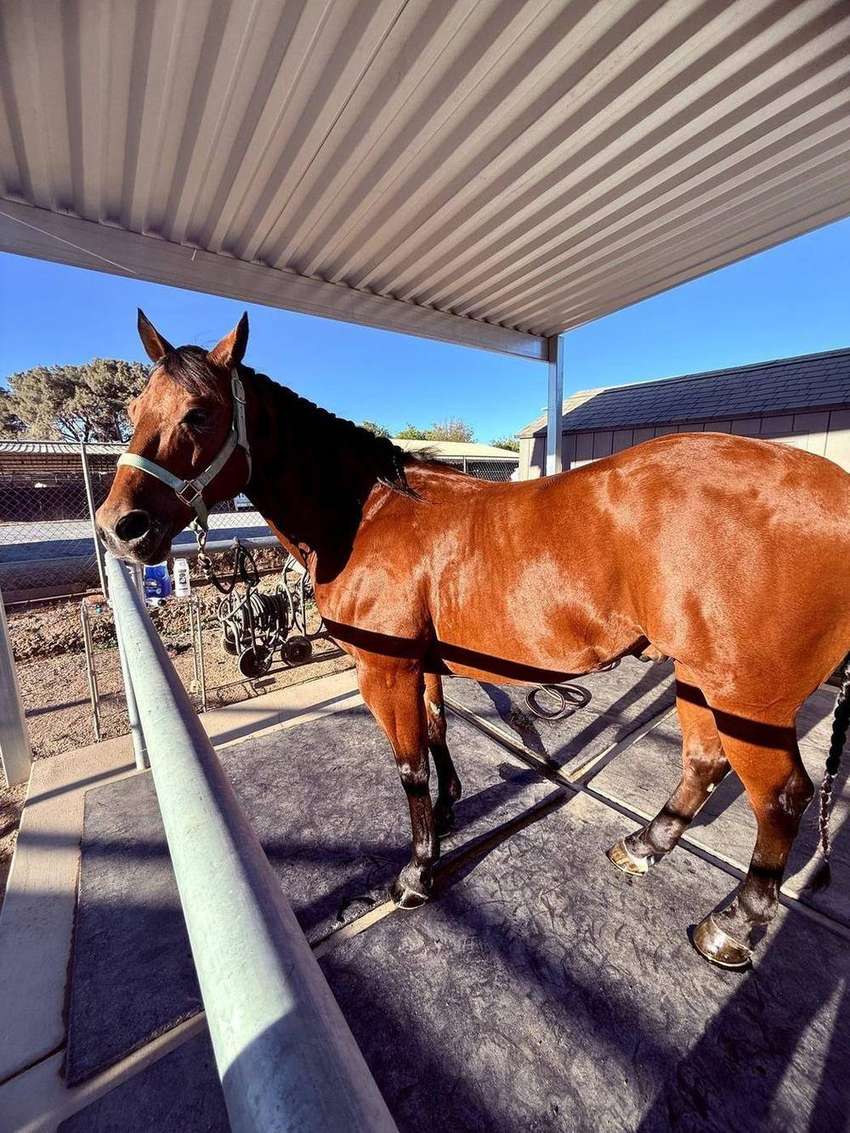
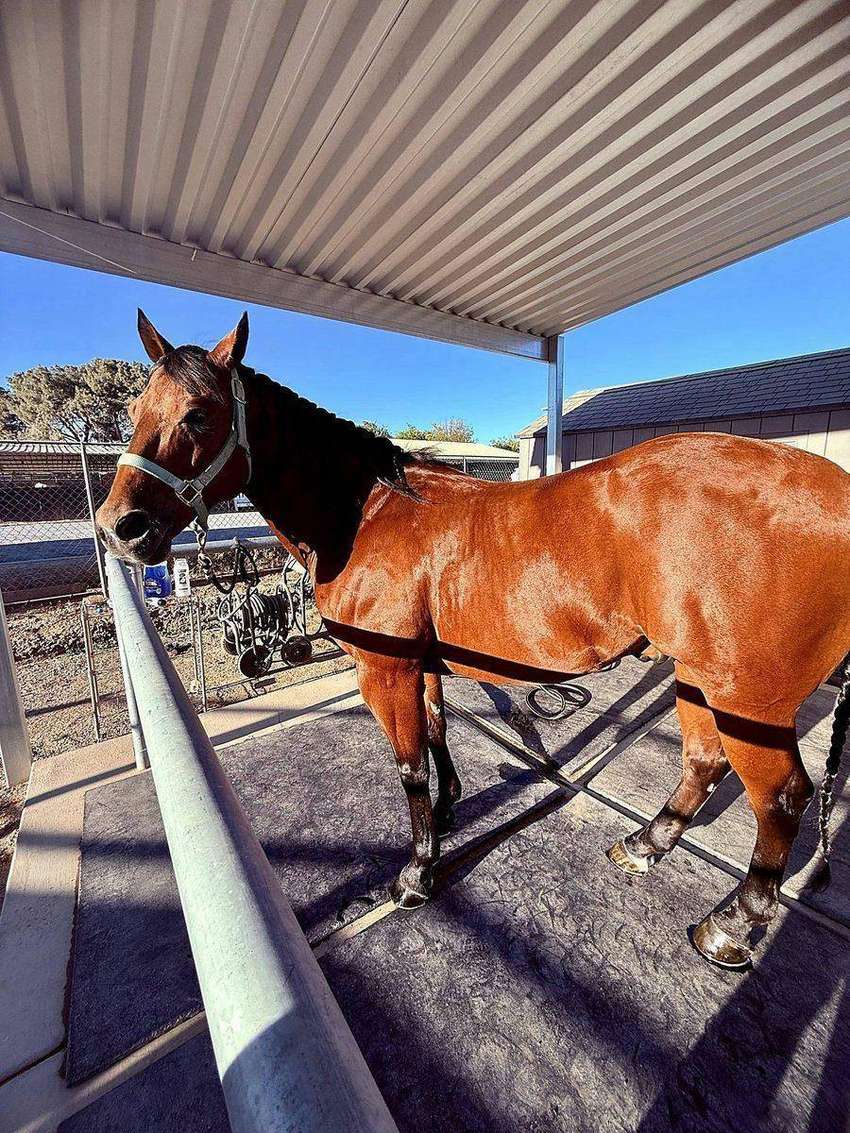
HERDA in Horses: The Basics
HERDA — hereditary equine regional dermal asthenia — is a recessive collagen defect of Quarter Horses and related stock breeds in which the skin along the back stretches, tears, and scars, usually first showing when training begins.
A Defect in the Skin's Scaffolding
Skin holds together because its layers are knitted by collagen. HERDA is caused by a recessive mutation affecting a protein that helps process that collagen, and a foal must inherit the mutation from both parents to be affected; horses with one copy are healthy carriers who look entirely normal. The defect is present from birth but hides well: affected foals usually seem ordinary until they are two or three years old, when the friction and pressure of a saddle meet skin that cannot bear it. HERDA is concentrated in Quarter Horse lines, particularly some cutting-horse families, and appears in Paints and Appaloosas with Quarter Horse ancestry. This article is information only.
Skin That Tears Instead of Toughing Up
The classic presentation is a young horse in early training whose skin along the back and neck begins to stretch oddly, then split, slough, and ulcerate under tack. Affected skin may feel loose and hyperextensible, develop fluid-filled swellings called seromas, and scar heavily where it tears. Lesions favor the back and sides of the neck — exactly where a saddle works — which is why HERDA so often announces itself as a horse that suddenly cannot be ridden. Consult your veterinarian promptly for skin that tears with ordinary handling, wounds along the back that will not heal normally, or unusual loose skin in a young stock-breed horse.
A DNA Answer, Not a Guess
Your veterinarian diagnoses HERDA by combining the history and skin findings with genetic testing: a DNA test on pulled hair roots identifies affected horses, carriers, and clears definitively. Skin biopsy can support the diagnosis by showing the abnormal collagen pattern under the microscope. The DNA test matters beyond the individual horse — because carriers are invisible, testing is the only way a breeder can know a mating is safe. A carrier bred to a tested-clear horse produces no affected foals; carrier to carrier risks one affected foal in four, on average. Testing breeding stock is now routine in the breeds affected, and results for stallions are a standard part of responsible advertising.
No Cure — So Management and Prevention
There is no treatment that repairs the collagen defect, and management is directed by your veterinarian: protect the skin from trauma and sun, manage wounds meticulously, and recognize that most affected horses cannot be ridden, since the saddle area is precisely the fragile area. Many affected horses are kept as pasture companions under careful skin surveillance; severely affected animals face humane decisions made with veterinary guidance. The hopeful chapter is prevention. HERDA is an entirely avoidable disease in the DNA era: test before breeding, never mate carrier to carrier, and ask for panel results whenever you buy or breed a stock-breed horse. Consult your veterinarian about testing any horse in the affected breeds.
Keep reading
From the ranch