Freestyle Reining: Reining Set to Music
Freestyle reining takes the spins, circles, and sliding stops of a reining pattern and choreographs them to music — part athletic test, part performance, all partnership.
The Pattern, Unbound
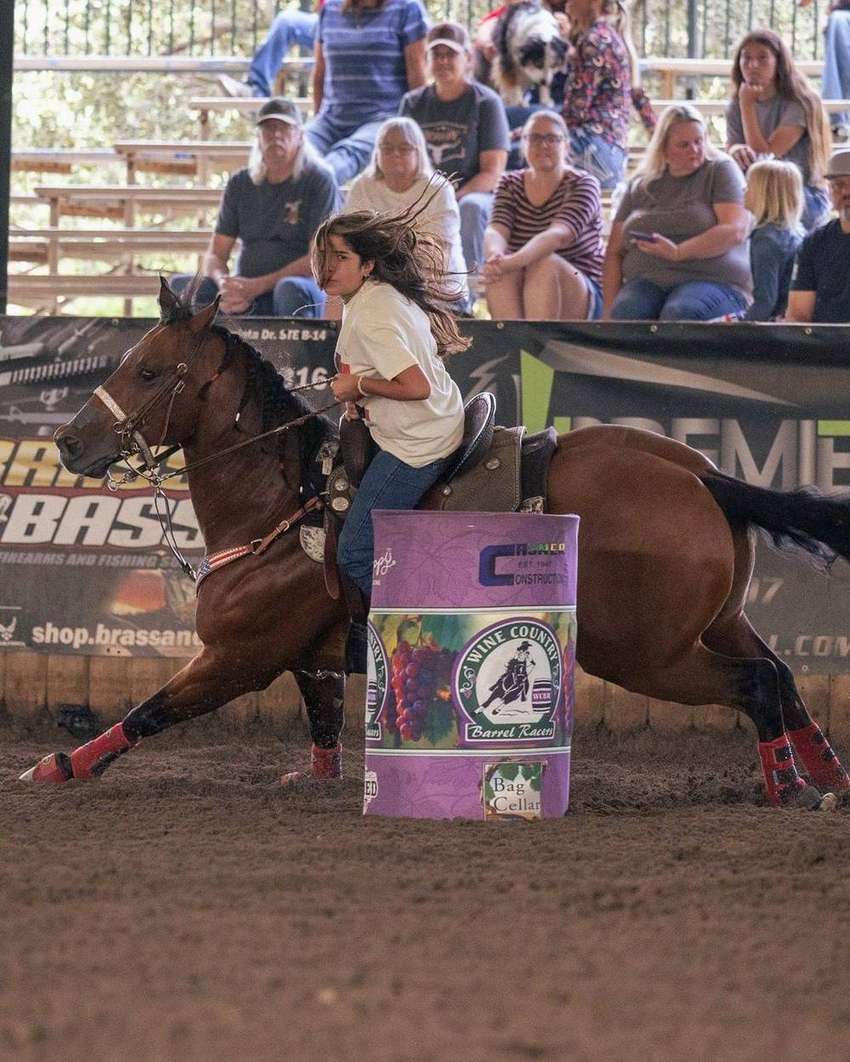
Standard reining asks horse and rider to perform a prescribed pattern of maneuvers — large fast and small slow circles, spins, rollbacks, backing, and the sliding stop — scored for precision and smoothness. Freestyle reining keeps the athletic standard and hands the choreography to the rider: within a set time limit, the pair performs a routine of their own design, set to music, and must include the required maneuvers the governing rules specify. What changes is everything around them — the order, the transitions, the story the music tells — and what does not change is that a sloppy spin is a sloppy spin, whatever song is playing.
Costumes, Characters, and Crowds
Freestyle is reining's showpiece, and riders lean into it: routines are built around themes, riders ride in costume, and props appear where the rules allow them. Audiences who could not score a pattern can read a freestyle instantly — a horse spinning in time to the music, stopping hard on the lyric, working quietly on a loose rein between the fireworks. Judges still anchor the score in the maneuvers themselves, with the routine's composition, use of music, and overall presentation shaping the final impression. It is the rare judged event where the crowd's favorite and the judge's favorite are so often the same horse.
Building a Routine That Works
Good freestyles are built from the horse outward. Start with the music your horse's tempo suits — a loping song for a ground-covering horse, something brighter for a quick-footed spinner — then map the required maneuvers onto the song's structure, putting the biggest moments where the music swells. Choreograph transitions so the horse is never rushed between elements, and leave genuine quiet moments: a horse that walks calmly mid-routine tells the judge the excitement is trained, not frantic. Practice the costume and any props at home until they are boring. On the day, the routine should look like the horse's idea.
Sound Horses Do This for Years
Freestyle asks for reining's hardest efforts — spins load the hocks, sliding stops load everything — and the horses that stay in it are managed like the athletes they are. Conditioning builds gradually, arena surfaces for stops are chosen with care, warm-ups are unhurried, and veterinary and farrier care are scheduled around the show calendar rather than after problems appear, with any lameness question put to your veterinarian early. Riders new to the event do best starting in standard patterns with a coach, learning the maneuvers cold before choreographing them. The music is the invitation; the horsemanship underneath it is the whole performance.
Keep reading
From the ranch