Cones Driving: The Obstacle Phase Explained
Cones — called obstacle-cone driving — is the precision phase of combined driving: a carriage driven at speed through narrow gates of paired cones, against the clock, with a ball balanced on each cone waiting to fall.
The Final Phase of Combined Driving
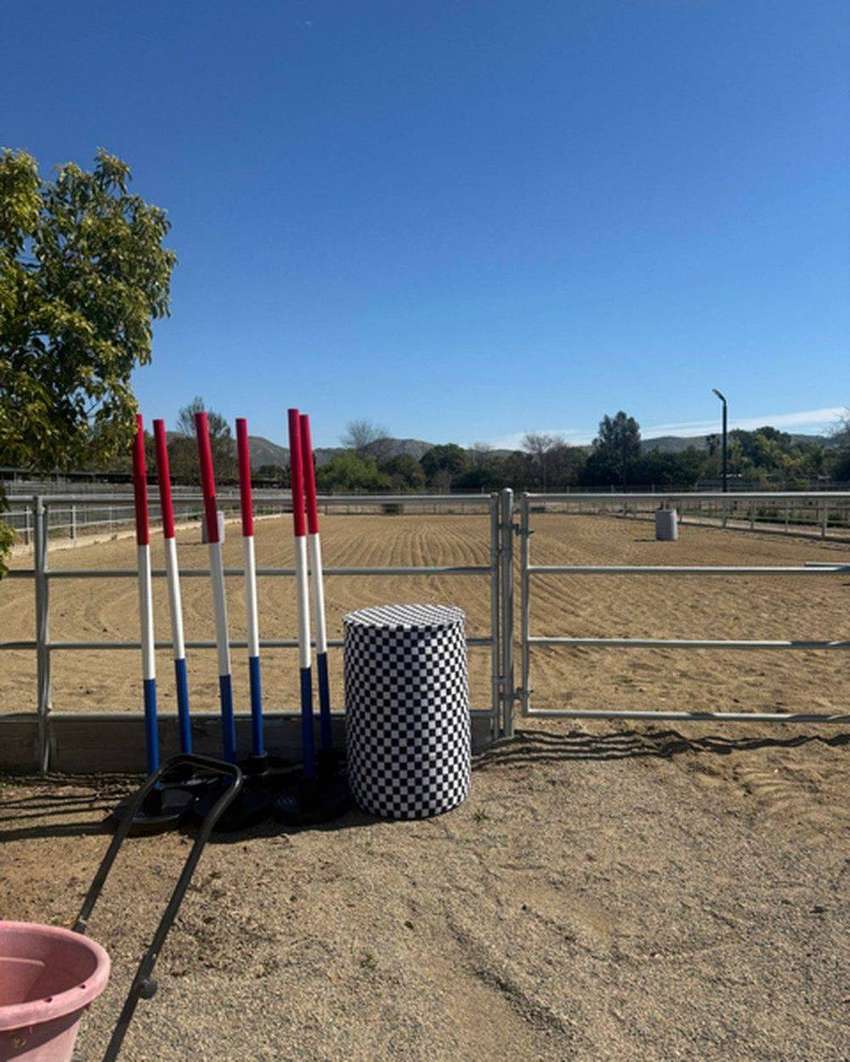
Combined driving, the carriage sport modelled on ridden eventing, runs three phases across a competition: dressage, the marathon across country, and cones. The cones phase traditionally comes last, and its job is specific — to show that after the marathon's exertions the horses are still fit, obedient, and accurate, and the driver still thinking clearly. The course is built in an arena as a sequence of numbered gates, each gate a pair of traffic cones set only a little wider than the carriage's wheels, with a lightweight ball balanced on top of each cone. Drive the gate cleanly and the balls stay; brush a cone and a ball falls. It is the driving world's show jumping, with the penalties measured in dropped balls instead of fallen rails.
Clearance Measured in Centimetres
What makes cones exacting is the margin: at the higher levels the clearance between wheel and cone is a matter of a handful of centimetres on each side, and it shrinks as the level rises while the course's technicality grows — combinations, serpentines, and gates set at angles that punish a driver who plans only one obstacle at a time. Time is the other opponent: an optimum time is set for the course, and exceeding it adds penalties alongside the three-penalty cost of each fallen ball. The driver walks the course beforehand as a show jumper does, measuring lines through the gates, because at a working trot or canter there is no time left to invent them.
The Groom Rides as Ballast and Memory
Driving is a team from one seat: the groom — called the navigator or backstepper in the marathon — rides on the carriage through the cones course too, shifting their weight to help balance the vehicle through tight turns and serving as the driver's second memory for the course order. The whip — the driver's formal title — holds reins, brake, and plan simultaneously, steering a vehicle that cannot be shortened or collected the way a ridden horse can: every turn is planned around the carriage's fixed width and turning circle, and the hind wheels cut inside the front, which is how cones that the horses passed comfortably come to be clipped by the axle behind them.
Starting in Cones
Cones is also the most accessible way into driving sport: local and club competitions run cones-only classes, a single well-schooled driving horse and a suitable carriage are enough to start, and the skills — accuracy, rhythm, course-walking — school horse and driver for every other phase. Safety is foundational: a sound, correctly fitted harness and carriage, a helmet for everyone on the box, and horses introduced to cones progressively at home, where the gates can start wide and the balls forgiving. Like the jumping phase it mirrors, cones rewards the calm horse and the driver who walks the course twice — precision at speed is a habit built in homework, then merely spent in the arena.
Keep reading
From the ranch