Bucked Shins in Young Racehorses
Bucked shins — sore, inflamed fronts of the cannon bones — are the classic setback of young Thoroughbreds in early fast work, a sign that bone is being loaded faster than it can remodel. Information only; call your veterinarian.
Bone That Has Not Finished Adapting
Bucked shins are a form of dorsal metacarpal disease: inflammation of the periosteum, the sensitive membrane over the front of the cannon bone, sometimes with tiny stress damage in the bone itself. Racehorse bone is living tissue that strengthens in response to work, but it remodels on its own schedule. The classic patient is a two-year-old whose training has stepped up to fast breezes before the cannon bones have adapted to the strain concentrated on their front surface at speed. The condition is so tied to that pattern — young horse, new speed, sore shins — that trainers have recognised it for as long as horses have raced. Always consult your veterinarian when a young horse comes back from fast work sore in front.
Signs: Sore to the Squeeze
The picture is distinctive: heat and swelling along the front of one or both cannon bones, a horse that flinches when the shin is palpated or squeezed, and a shortened, sore way of going after fast work that may look sound at the walk. Both front legs are commonly involved, one worse than the other. Your veterinarian will palpate the limbs, watch the horse move, and often take radiographs — films can show periosteal reaction and, importantly, check for the more serious problem in the same family, a dorsal cortical stress fracture, which changes the management entirely. A shin that stays sore, or a horse lame in one leg only and worse than its stablemates, deserves imaging rather than assumptions.
Treatment Is Load Management
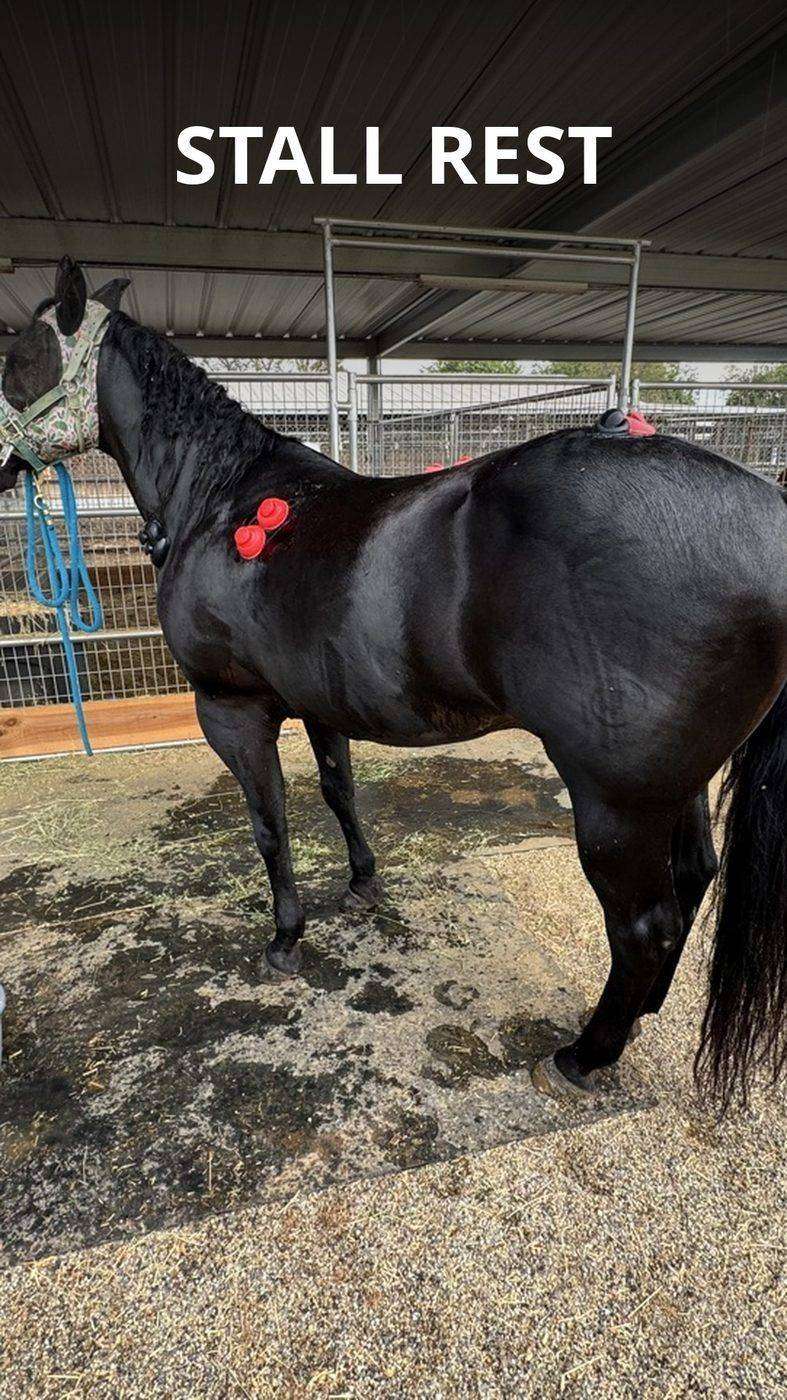
There is no shortcut around biology: the shin heals by resting from fast work while the bone finishes the remodelling the work demanded, then returning to speed gradually, under your veterinarian's direction. Anti-inflammatory medication may be used briefly as your veterinarian advises, along with cold therapy in the acute phase. Various treatments have been tried over the decades, but the consistent finding in practice is that time and a sensible progression are what work — horses rushed back to breezing on sore shins re-buck, and repeated episodes risk the stress fracture everyone is trying to avoid. Expect weeks, not days, and a rebuilt training staircase at the end of it.
Prevention Is a Training Staircase
Modern training research points the same direction as old horsemen's instinct: bone adapts best to short, progressive exposures to speed introduced gradually, on consistent surfaces, with recovery days that let remodelling happen. Sudden jumps in distance or speed, and long layoffs followed by an abrupt return to fast work, are the patterns that produce sore shins. Keep honest records of fast works and shin soreness, tell your veterinarian the full training history, and treat the first episode as information rather than bad luck: the shin is reporting exactly how much speed the bone was ready for. Good programs listen the first time.
Keep reading
From the ranch