Slowing Down Beside a Horse: A Quiet Practice
Horses breathe slowly. Standing beside one and matching that rhythm, even for a few minutes, is one of the oldest calming practices there is — and one of the simplest.
What It Is
The practice is exactly what it sounds like: stand or sit near a calm horse, rest a hand lightly on its shoulder or neck if the horse is comfortable with it, and slow your own breathing to match the horse's. Horses at rest breathe roughly 8 to 16 times a minute — slow, deep, regular. You don't force anything; you just let your breathing settle into the same unhurried pace. Five quiet minutes is plenty. There's no technique to master and nothing to achieve.
Why Horses
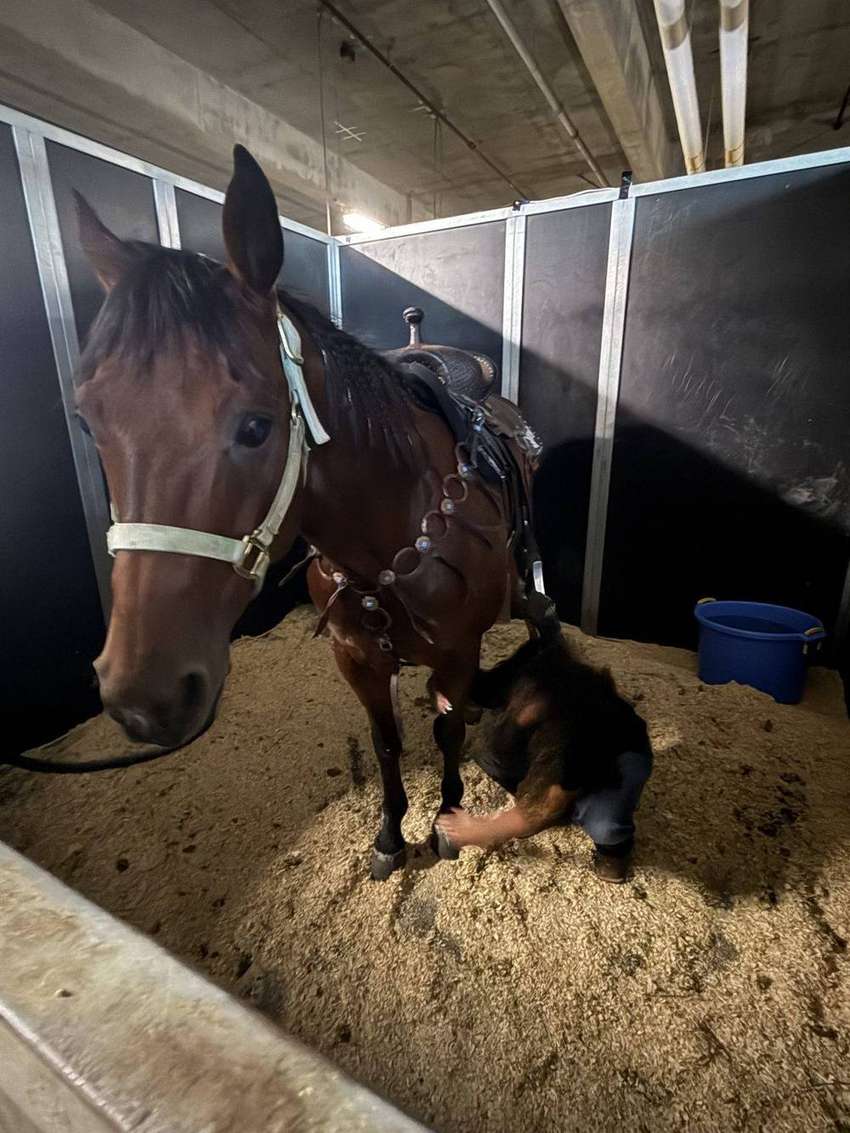
Horses are exquisitely tuned to the bodies around them — it's how they survive as prey animals, reading tension and calm in every creature nearby. A calm, slow-breathing human is reassuring to a horse; many horses visibly settle — head lowering, eyes softening, maybe a deep sigh — when the person beside them slows down. So the practice runs both ways: you borrow the horse's steadiness, and the horse reads yours. It's a small loop of mutual calm, no words required.
How to Try It
Pick a quiet moment — not feeding time, not when the barn is bustling. Stand at the horse's shoulder (never directly in front or behind), keep your body relaxed, and just notice the rise and fall of the horse's ribs. Let your breath lengthen naturally to match. If your mind wanders, bring your attention back to the breath you can feel under your hand. If the horse walks off, let it — that's information, not failure. Try again another time, or with another horse.
What This Isn't
This isn't therapy, treatment, or a intervention for any condition — it's a quiet practice some people enjoy, like watching a sunset or sitting by water. It doesn't fix anything and doesn't promise to. What it offers is simpler: a few minutes of deliberate slowness in the company of an animal that's very good at it. If you're dealing with something difficult, this practice can sit comfortably alongside professional support. Sometimes the most useful thing a ranch offers is just a place to be still for a while.
Keep reading
From the ranch